Mon-Fri 07:00 AM - 05:00 PM
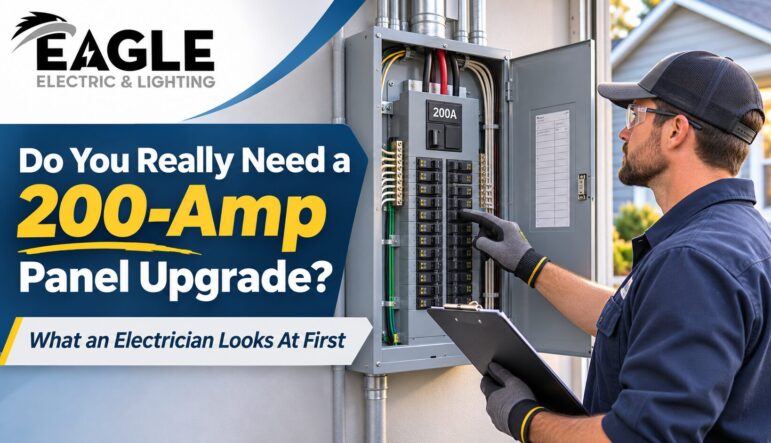
Do you really need a 200-amp electrical panel upgrade for your Boise-area home? If you’re planning to install an EV charger, replace your HVAC system, remodel your kitchen, or add a hot tub, you may have been told that upgrading from 100-amp to 200-amp service is necessary. However, not every home needs a larger electrical service. Professional Electrical Panel Repair & Replacement begins with evaluating your existing electrical capacity, panel condition, household power demands, and future plans.
For homeowners in Boise, Eagle, Star, Meridian, Middleton, Caldwell, Emmett, and Nampa, understanding these factors can prevent unnecessary expenses while protecting your property. At Eagle Electric & Lighting, the goal is to identify the right electrical solution for your home’s actual needs, whether that means repairing an existing panel, replacing outdated equipment, adding circuits, or upgrading the service to 200 amps.
The short answer is that a 200-amp panel upgrade is not automatically necessary for every home. A properly maintained 100-amp electrical service can still support many households, depending on their appliances, heating systems, and overall electrical demand. The deciding factor is not simply the age or square footage of your home but how much electricity it needs under applicable electrical load calculation rules.
Modern homes frequently require more electrical capacity than older properties because of larger HVAC equipment, electric cooking appliances, home offices, EV charging stations, and other high-demand devices. Nevertheless, an electrician should evaluate your actual electrical loads before recommending a service upgrade.
Electrical service capacity is measured in amperes, commonly called amps. Most residential electrical systems in the Treasure Valley use approximately 120/240-volt split-phase service, allowing different appliances to operate at the appropriate voltage. A 100-amp service has a theoretical maximum capacity of approximately 24,000 watts at 240 volts, while a 200-amp service has approximately 48,000 watts.
These figures represent theoretical maximums, not the amount of electricity homeowners should continuously consume. Actual allowable loading depends on electrical code requirements, continuous loads, equipment ratings, and calculated household demand. An electrician evaluates these details rather than assuming every appliance will operate at full capacity simultaneously.
A larger panel provides additional potential capacity, but upgrading unnecessarily can involve considerable expense. Replacing the panel may also require modifications to the meter equipment, service conductors, grounding and bonding systems, or utility connections. These additional requirements depend on the existing installation and the scope of the proposed work.
Importantly, installing a panel labeled for 200 amps does not automatically increase your home’s electrical service to 200 amps. The service conductors, disconnecting equipment, utility facilities, and other relevant components must be appropriately rated. A professional assessment determines whether a complete service upgrade is necessary.
An experienced electrician looks beyond the number printed on your main breaker. A thorough assessment considers the entire electrical distribution system, including equipment condition, calculated demand, available circuit capacity, and safety concerns. This approach helps distinguish between an overloaded circuit, a deteriorating panel, and a genuinely undersized electrical service.
The first step is identifying the capacity of your existing service and electrical panel. An electrician verifies the main breaker rating, panel manufacturer information, equipment labeling, and relevant service components. Older homes may have 60-amp or 100-amp systems, while many newer houses have 200-amp installations.
However, a main breaker rating alone cannot confirm whether every component is properly sized or compatible. Electricians must also evaluate the service entrance equipment, conductors, and overall installation. This is particularly important when previous homeowners have modified electrical equipment or completed undocumented renovations.
A professional electrical load calculation is one of the most important parts of determining whether a 200-amp upgrade is necessary. The calculation evaluates anticipated electrical demand using the applicable National Electrical Code provisions. It considers household characteristics, general lighting and receptacle loads, major appliances, heating and cooling equipment, and other relevant electrical loads.
For example, a Boise home with gas heating, a gas water heater, and a modest electrical load may have different capacity requirements than a similarly sized home with electric resistance heating, an electric range, and an EV charger. The U.S. Department of Energy provides useful guidance on home electrification and electrical panel upgrades, including explanations of electrical capacity and load calculations. An electrician uses the appropriate code-approved method rather than relying on rough estimates.
Even when an existing panel has sufficient electrical capacity, its physical condition may justify repairs or replacement. Electricians inspect accessible components for overheating, corrosion, damaged equipment, incompatible breakers, deteriorated insulation, and other visible safety concerns. They also consider the panel’s age, manufacturer, maintenance history, and suitability for continued service.
A panel that repeatedly trips breakers or produces unusual noises requires investigation. These symptoms do not always mean the entire electrical service is undersized. Sometimes the underlying issue involves an overloaded branch circuit, faulty breaker, loose connection, or damaged wiring that needs professional attention.
Another important consideration is whether the existing panel has sufficient approved space for additional circuits. A panel may have adequate electrical capacity but lack physical room for the breakers required by a kitchen renovation, garage workshop, or new HVAC system. Conversely, a panel with several unused breaker positions may still lack sufficient electrical service capacity.
An electrician also discusses your future plans. Installing a Level 2 EV charger, converting gas appliances to electric models, or finishing a basement could change the recommended electrical solution. Planning ahead helps homeowners avoid paying for repeated electrical modifications over several years.
Electrical panels generally do not require replacement simply because they reach a particular age. Their condition, safety, manufacturer specifications, and suitability for current electrical demands matter more. However, certain warning signs should prompt a professional electrical inspection.
Watch for the following problems:
These symptoms require different responses depending on their cause. Breaker trips may indicate a problem with one circuit, while evidence of overheating inside a panel may require more extensive repairs or replacement. If you notice smoke, sparking, or a burning smell, avoid touching the affected equipment and seek urgent professional assistance. Call emergency services when there is an active fire or immediate danger.
Not every electrical problem requires complete panel replacement. If a qualified electrician determines that the equipment remains safe, compatible, and serviceable, certain problems may be resolved through approved repairs. These might include replacing a defective breaker, correcting an identified connection problem, or addressing a specific branch-circuit issue.
However, repairing an unsafe or obsolete panel may not be a suitable long-term solution. Equipment with substantial deterioration or unavailable approved replacement components may warrant replacement even if the existing service amperage is adequate. The recommendation should reflect the actual condition of the system.
Homes throughout southwestern Idaho vary considerably in age, construction style, heating systems, and electrical equipment. A historic property near downtown Boise may have very different electrical requirements from a newer home in Meridian or a custom-built property outside Star. Local climate and renovation plans also influence electrical demand.
Established Boise neighborhoods such as the North End, East End, Central Bench, and Vista contain homes built across different periods. Properties near Camel’s Back Park and older residential streets around the Boise Bench may have experienced multiple electrical upgrades or renovations over time. Some may still contain older panels, limited circuits, or electrical installations that require evaluation.
When renovating these homes, electricians often need to consider both the existing panel and the wiring serving individual rooms. A modern 200-amp service does not automatically correct outdated branch-circuit wiring or grounding deficiencies. Proper planning identifies which components actually need attention.
Many homes around Eagle Island State Park, Meridian’s Paramount and Bridgetower communities, Star Road, and Middleton’s developing residential areas have different electrical priorities. A newer house may already have 200-amp service but require additional circuits for a garage workshop, EV charging station, hot tub, or future home addition. Other properties may need a load calculation to determine whether existing capacity can support planned improvements.
Homes with larger floor plans, accessory buildings, or substantial outdoor electrical equipment may have additional design considerations. If a property includes a detached workshop or future accessory dwelling unit, an electrician should evaluate feeder sizing, distribution equipment, and overall service capacity. The correct solution depends on the project’s calculated demand, not the neighborhood alone.
In Caldwell neighborhoods near Indian Creek, established Nampa residential areas, and homes around Emmett, electrical systems can range from older installations to recently constructed equipment. Homeowners may be replacing aging HVAC systems, adding air conditioning, renovating kitchens, or installing electrical equipment in garages and outbuildings. Each project can change the load on an existing service.
Rural and semi-rural properties may also have electrical demands associated with irrigation pumps, wells, shops, or other specialized equipment. These loads should be included where applicable rather than assuming residential service requirements are identical across properties. An evaluation can also identify utility coordination requirements before a project begins.
Treasure Valley homeowners should pay particular attention to these common equipment demands:
These examples illustrate why an accurate load calculation matters more than simply counting appliances. A home with several high-demand devices does not necessarily use all of them at full output simultaneously. Code-approved calculations account for the relevant load characteristics.
In some cases, yes. Existing 100-amp service may support additional equipment when the calculated load remains within allowable capacity. The electrician must also determine whether the panel has suitable circuit space and whether the new installation can meet applicable safety requirements.
Level 2 charging does not always require the highest available charger output. Some EV owners can meet their daily driving needs with lower charging currents, depending on the vehicle, driving habits, and available charging time. A properly configured charger with a lower current setting may be a practical alternative when electrical capacity is limited.
Approved energy management equipment may provide additional options in certain installations. Such systems can control charging or manage electrical loads to remain within established limits. A licensed electrician should verify equipment compatibility and code compliance before recommending this approach.
Hot tubs and larger workshop equipment may require dedicated circuits, specific protective devices, and appropriate wiring methods. Their electrical requirements vary by manufacturer and model. Outdoor installations introduce additional considerations involving equipment placement, grounding, bonding, and weather exposure.
Home additions can also increase demand through extra lighting, receptacles, heating, cooling, and appliances. Before adding these circuits, an electrician should confirm whether the existing distribution and service equipment can safely accommodate the proposed work. In some situations, a correctly designed subpanel may solve a space problem without increasing service amperage.
When an electrical load calculation or equipment assessment supports upgrading to 200 amps, the project may involve more than installing a new breaker box. The exact work depends on the home’s existing electrical infrastructure, accessibility, utility requirements, and applicable electrical codes. A professional estimate should clearly identify the proposed scope.
The process begins with examining existing equipment, reviewing electrical loads, and discussing expected future improvements. An electrician then determines whether the project requires panel replacement, new service conductors, meter equipment modifications, grounding and bonding updates, or other necessary work. The assessment should also identify any conditions that could affect the project schedule or cost.
Homeowners should receive an explanation of why a particular solution is recommended. If an existing 100-amp service is adequate, the electrician can discuss alternatives to a complete service upgrade. If additional capacity is necessary, the proposal should explain what must change to safely achieve it.
Electrical service upgrades generally involve permitting, inspection, and coordination with the electric utility. The responsible permitting and inspection authority depends on the property location and applicable jurisdictional arrangements. Idaho’s Division of Occupational and Professional Licenses provides information about requesting electrical inspections on trade permits.
For service replacement projects, the electrician may need to arrange a temporary power disconnection and coordinate reconnection after required approvals. Idaho Power or another serving utility may have specific requirements for service equipment and scheduling. Homeowners should discuss expected outages and any utility-related work before installation begins.
The price of upgrading to 200-amp service depends on several factors. A straightforward replacement with accessible equipment may be substantially different from a project requiring extensive service modifications, relocation, underground electrical work, or other infrastructure changes. Providing an accurate estimate requires evaluating the actual installation.
Important cost considerations include:
A homeowner should ask for an itemized scope rather than comparing estimates based only on the words “200-amp upgrade.” Two proposals can describe very different amounts of electrical work. Understanding those differences helps you evaluate the long-term value of each recommendation.
Before scheduling electrical work, think about both your current problems and your plans for the next several years. Your existing electrical service may be adequate today but require reconsideration if you plan to install multiple high-demand appliances. Likewise, replacing an unsafe panel may be necessary even when you do not need additional amperage.
These questions help establish whether you need an electrical panel repair, a panel replacement at the existing amperage, or a complete service upgrade. The most appropriate choice should balance safety, capacity, cost, and future flexibility. There is no single electrical panel size that is automatically right for every house.
Electrical service equipment contains components that may remain energized even when the main breaker is switched off. Removing panel covers or attempting service modifications without the necessary training and equipment creates serious shock and arc-flash hazards. Homeowners should leave panel inspections involving exposed energized components to qualified professionals.
Eagle Electric & Lighting provides residential Electrical Panel Repair & Replacement services throughout Boise and surrounding Treasure Valley communities. Its electrical services include panel evaluations, repairs, replacements, and service upgrades. A professional assessment can help determine what your home actually requires before committing to a larger installation.
No. A 200-amp electrical service is not mandatory for every existing Boise home simply because it is a common option in modern construction. The required capacity depends on the home’s calculated electrical load, equipment condition, and applicable code requirements. A properly sized and maintained 100-amp service may remain suitable for certain households.
Repeated breaker trips, noticeable light dimming, and other electrical abnormalities can indicate problems requiring inspection. However, these symptoms can also result from individual circuit overloads, loose connections, or defective equipment. An electrician can diagnose the cause and perform a load calculation to determine whether your overall electrical service is undersized.
Possibly. Some homes with 100-amp electrical service can accommodate Level 2 charging when the calculated demand allows it. Lower-current charging or approved load management may provide alternatives in certain situations. A professional electrical evaluation is necessary before choosing a charger and circuit configuration.
Electrical panel replacement and service upgrades generally require appropriate electrical permits and inspections. Requirements and administration may vary according to the property’s jurisdiction and project details. A licensed electrical contractor can identify the responsible authority, confirm current requirements, and explain how inspections and utility coordination will be handled.
No. Panel replacement involves installing new distribution equipment, potentially while retaining the existing service capacity. Upgrading to 200-amp service involves ensuring the complete relevant electrical service installation is appropriately rated for that capacity. A homeowner may need a replacement panel for safety reasons without needing increased amperage.
Some straightforward residential panel replacements can be completed within a working day, but more complex service upgrades may require additional time. Permits, inspection availability, utility scheduling, equipment modifications, and unforeseen site conditions can influence the timeline. Ask your electrician for a project-specific schedule and an explanation of the expected power interruption.
Have the electrical system evaluated during the planning stage rather than automatically replacing the panel first. A kitchen renovation or heat pump installation may introduce new circuits and significant electrical loads. Reviewing equipment specifications and completing the appropriate calculations early can prevent redesigns, scheduling delays, and unnecessary expenses.
A 200-amp electrical panel upgrade can be a valuable investment when your existing service is inadequate, unsafe, or unsuitable for planned improvements. However, the right decision begins with understanding your home’s actual electrical requirements. A professional electrician can evaluate the service, inspect equipment condition, calculate electrical demand, and explain whether repair, replacement, or increased capacity is appropriate.
Whether you own an older home near Boise’s North End, a family property in Meridian, a newer house in Eagle or Star, or a residence in Middleton, Caldwell, Emmett, or Nampa, Eagle Electric & Lighting can help you assess your electrical panel needs. The focus is on safe, practical electrical solutions that support your household today while considering tomorrow’s demands.
Need an electrical panel inspection or considering an upgrade to 200 amps? Contact Eagle Electric & Lighting at (208) 781-0220 to discuss your home’s electrical system and schedule a professional evaluation. Get clear recommendations for your property before investing in electrical work you may not need.