Mon-Fri 07:00 AM - 05:00 PM
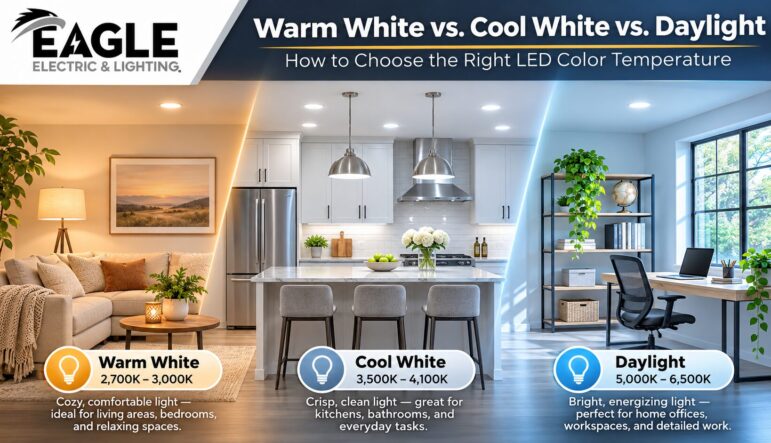
Choosing the right LED lighting can completely change how your home looks and feels. Whether you are renovating a kitchen in Boise, updating a living room in Eagle, or installing outdoor fixtures in Meridian, understanding the differences between warm white, cool white, and daylight LEDs is essential. Professional Lighting Services can help homeowners achieve the right balance of comfort, visibility, energy efficiency, and style. This guide explains LED color temperatures, where each works best, and how to choose lighting that suits homes throughout Idaho’s Treasure Valley.
LED color temperature describes the appearance of white light produced by a bulb or fixture. It is measured in Kelvin (K), a scale that helps distinguish warm, yellowish illumination from cooler, bluish-white light. Color temperature affects the atmosphere of a room, how finishes appear, and how comfortable a space feels during different activities.
Unlike brightness, which is measured in lumens, color temperature describes the visual tone of light. A 2700K bulb and a 5000K bulb can produce the same number of lumens while creating noticeably different environments. Understanding this distinction helps homeowners avoid buying brighter lights when what they actually need is a different light color.
Lower Kelvin values produce warmer-looking illumination, while higher values create a cooler, whiter appearance. Common residential LED color temperatures include:
The U.S. Department of Energy explains these differences in its consumer guide to energy-efficient lighting. There is no universally perfect color temperature for every room. The best selection depends on how the space is used, the available natural light, and personal preference.
Warm white LEDs produce a soft, welcoming glow similar to traditional incandescent lighting. They are particularly effective in living rooms, bedrooms, dining areas, and spaces designed for relaxation. Their warmer appearance complements wood flooring, natural stone, beige walls, and comfortable residential interiors.
For homeowners with traditional houses near Boise’s North End, Hyde Park, or Warm Springs Avenue, warm white lighting can complement original architectural details without making the interior feel overly clinical. It is also an attractive choice for entryways and covered patios. A 2700K bulb creates a particularly cozy atmosphere, while 3000K offers a somewhat cleaner, more contemporary look.
Cool white lighting provides a more neutral, crisp appearance than warm white. It works well in kitchens, laundry rooms, bathrooms, workshops, and other areas where seeing details clearly matters. Homeowners often choose 3500K when they want a practical middle ground between a relaxed residential atmosphere and brighter-looking task lighting.
In newer homes around Harris Ranch, Southeast Boise, and Meridian, neutral-white recessed lighting can complement modern cabinetry, stainless steel appliances, and contemporary finishes. However, excessively cool lighting may feel uncomfortable in rooms intended primarily for relaxation. The goal is to improve practical visibility without sacrificing the character of the space.
Daylight LEDs create a crisp, cool-toned appearance that can be useful for detailed work. Common applications include garages, hobby rooms, utility spaces, and workbenches where strong, evenly distributed illumination is important. Daylight bulbs can also work well for specific reading or craft tasks when glare is carefully controlled.
Despite the name, a daylight LED does not reproduce every characteristic of natural sunlight. It primarily describes the bulb’s cool white color appearance. Installing 5000K or 6500K fixtures throughout a bedroom or living room may create a harsher atmosphere than many homeowners prefer, particularly after sunset.
For most residential living spaces, 2700K to 3000K provides a comfortable starting point. Warm illumination makes upholstered furniture, wood finishes, and decorative features appear inviting. It is particularly useful during Treasure Valley winters, when shorter daylight hours mean families rely more heavily on indoor lighting during evenings.
In older Boise homes, consider combining warm ceiling fixtures with lamps and wall sconces rather than relying on one powerful overhead light. In modern Eagle residences, dimmable 3000K recessed lights can provide flexibility for entertaining, watching television, and relaxing. Keeping nearby fixtures at similar color temperatures also creates a more cohesive appearance.
Kitchens typically benefit from 3000K to 4000K lighting, depending on the room’s design and function. A warm-neutral 3000K can make an open-concept kitchen feel connected to the living area, while 3500K provides a practical balance for food preparation. Under-cabinet LED strips offer focused task lighting without requiring the entire room to be excessively bright.
Bathrooms often work well with 3000K to 4000K lighting, especially around mirrors and vanities. Even illumination on both sides of a mirror can reduce facial shadows more effectively than one overly bright ceiling fixture. For makeup application or grooming, look for a high color rendering index in addition to the desired Kelvin rating.
For offices, 3500K to 4000K is often a practical choice, while detailed workshop activities may benefit from 4000K to 5000K. The right light distribution matters just as much as color temperature, particularly when working with paperwork, tools, or small components. Positioning fixtures to reduce reflections and shadows can improve visibility without unnecessarily increasing brightness.
Homeowners in Star, Middleton, Emmett, and other Treasure Valley communities may use garages for storage, vehicle maintenance, and household projects. These multipurpose spaces benefit from well-positioned LED shop lights and supplemental task lighting. Choose fixtures appropriate for the garage environment, including anticipated temperature conditions and exposure to moisture.
Hallways and staircases generally look most natural when their lighting matches adjacent living spaces. For many homes, 2700K to 3000K provides comfortable illumination while making nighttime movement easier. Appropriate fixture placement and adequate brightness are especially important around stairs, corners, and changes in floor level.
For homes with high ceilings or large entryways, recessed downlights and decorative fixtures can work together to create layered lighting. Avoid selecting an extremely cool bulb simply to make a hallway appear brighter. Increasing lumens or improving fixture placement may solve the problem more effectively.
Boise and surrounding communities experience significant seasonal changes in daylight hours. During summer, naturally bright rooms may need relatively little artificial illumination until evening. During winter, homeowners may depend on electric lighting much earlier in the day, making comfort and adjustable brightness especially valuable.
Rooms with north-facing windows may benefit from carefully selected neutral lighting, while sunny south-facing rooms may need more attention to glare and changing light levels. Before purchasing multiple fixtures, test your preferred Kelvin temperature during both daytime and evening conditions. A bulb that looks ideal in a brightly lit store may appear very different inside your home.
Outdoor lighting should improve visibility and highlight architectural features without creating unnecessary glare. Warm white LEDs around 2700K to 3000K are often effective for patios, landscaping, and residential walkways. Their softer appearance can complement natural surroundings and feel more welcoming than blue-white floodlighting.
For homes near Eagle Island State Park, the Boise River Greenbelt, or other open spaces, downward-directed fixtures can help keep light focused on the intended area. Motion sensors and appropriately positioned security lights provide additional control. Choose outdoor fixtures with suitable weather-resistance ratings rather than assuming every LED is designed for Idaho’s rain, snow, and temperature changes.
Lighting priorities also vary with home style and property layout. Established neighborhoods in downtown Nampa and near Caldwell’s Indian Creek Plaza may include older fixtures that benefit from updated LED technology. Newer subdivisions in Meridian and Star may have builder-installed recessed lighting that homeowners want to customize for a warmer or more coordinated appearance.
Properties in Middleton and Emmett may have larger driveways, detached garages, or outdoor work areas requiring additional task and security lighting. Rather than using the same color temperature everywhere, match each lighting zone to its purpose. A warm front porch, neutral kitchen, and brighter garage can coexist comfortably when fixtures are planned thoughtfully.
Watts measure electricity consumption, while lumens measure visible light output. When replacing an older incandescent bulb, compare its brightness with the lumen rating of the new LED rather than matching wattage directly. For example, an LED producing approximately 800 lumens is commonly marketed as a replacement for a traditional 60-watt incandescent bulb.
The U.S. Department of Energy reports that LED lighting can use up to 90% less energy and last up to 25 times longer than traditional incandescent lighting. Actual savings depend on the products replaced, operating hours, and electricity costs. Color temperature alone does not determine whether one LED will be more energy-efficient than another.
The Color Rendering Index describes how accurately a light source renders colors compared with a reference source. It is different from Kelvin temperature, although both influence how a room appears. For general household lighting, a CRI of at least 80 is a reasonable baseline, while 90 or higher can be particularly useful in kitchens, bathrooms, and areas displaying artwork.
High-CRI lighting can help food, clothing, paint colors, and skin tones appear more natural. This matters when choosing lighting for a renovated Boise kitchen or a Meridian bathroom vanity. Remember that even a high-CRI bulb can create unwanted shadows or glare if the fixture is poorly positioned.
Not all LED bulbs work properly with every dimmer. Incompatible combinations can cause flickering, buzzing, limited dimming range, or lights that fail to switch off completely. Before installing dimmable LEDs, verify compatibility with the manufacturer’s recommended switches and controls.
The ENERGY STAR guidance for LED downlights also explains color selection, dimmer compatibility, and important fixture ratings. Recessed lighting installed near attic insulation must use equipment approved for that installation, and bulbs inside enclosed fixtures must be rated for enclosed use. An electrician can evaluate these requirements before permanent fixtures are replaced.
Tunable-white fixtures allow homeowners to change color temperature without replacing bulbs. A kitchen might use neutral-white lighting while preparing meals and transition to warmer lighting in the evening. Some products also offer dim-to-warm technology, which gradually produces warmer-looking light as brightness decreases.
Smart switches, compatible dimmers, and programmable lighting controls can add convenience, but product compatibility should be checked before purchasing. The simplest solution is not always the most technologically advanced one. A dependable dimmable fixture with the correct Kelvin rating may be sufficient for many rooms.
Replacing a compatible screw-in bulb is generally straightforward, but installing recessed fixtures, adding circuits, moving lighting locations, or replacing hardwired controls requires greater electrical knowledge. Older homes around Boise’s North End and Warm Springs may have wiring or electrical boxes that need evaluation before a remodel. New construction and renovation projects also benefit from planning fixture placement before ceilings and walls are finished.
Eagle Electric & Lighting provides residential and commercial lighting installation and repair services throughout the Treasure Valley. Its lighting offerings include recessed LED installation, under-cabinet lighting, landscape lighting, security fixtures, chandeliers, and lighting controls. Professional evaluation helps ensure the selected fixtures suit the space and that electrical work follows applicable safety requirements.
A good lighting plan begins by identifying what each room needs rather than selecting one bulb color for the entire property. Electricians can help assess existing fixtures, switching arrangements, light placement, and potential dimmer compatibility problems. This is especially helpful when combining decorative lighting, general illumination, and task lighting within the same room.
For homeowners in Boise, Eagle, Star, Meridian, Middleton, Caldwell, Emmett, and Nampa, an organized lighting upgrade can improve daily comfort while reducing unnecessary electricity consumption. Consider upgrading frequently used fixtures first, then extending the same approach to adjoining rooms and outdoor areas. Planning ahead also helps reduce the inconvenience of buying incompatible fixtures or repeating installation work.
Warm white lighting between 2700K and 3000K is generally preferred for bedrooms, living rooms, and dining spaces because it creates a welcoming atmosphere. Cool white lighting between approximately 3500K and 4100K can be useful in kitchens, laundry rooms, and work areas. Many Boise homeowners benefit from combining both rather than selecting one temperature for every room.
A range of 3000K to 4000K is a practical starting point for residential kitchens in Meridian. Choose 3000K when you want a warmer open-concept appearance, or consider 3500K to 4000K for a more neutral task-oriented environment. Under-cabinet lighting and adequate countertop illumination can make a greater difference than Kelvin alone.
A 5000K bulb is not necessarily brighter than a 2700K bulb with the same lumen output, but it usually appears cooler and crisper. This appearance can feel harsh in bedrooms, especially during evening hours. Warm white bulbs with suitable dimming controls are often more comfortable for bedroom use.
Warm to neutral-white lighting, often around 2700K to 4000K, can work for residential security applications depending on the property layout and fixture design. Effective security lighting depends on adequate illumination, careful positioning, and glare control rather than choosing the highest Kelvin number. Motion-activated, shielded fixtures can help illuminate entrances and walkways without unnecessarily lighting neighboring properties.
Yes, using different color temperatures in different rooms is common and can be beneficial. Warm white lighting may suit living areas, while cooler lighting may be appropriate for a workshop or garage. Within one open room, matching nearby fixtures generally creates a more consistent appearance unless separate lighting zones are intentionally designed.
LED flickering may result from an incompatible dimmer, a defective bulb, an unsuitable driver, or an electrical connection problem. Start by checking the product’s stated compatibility, but do not open wiring boxes or attempt live electrical repairs. If flickering continues across multiple fixtures or is accompanied by buzzing, overheating, or other unusual behavior, arrange an inspection by a qualified electrician.
Professional lighting upgrades can reduce electricity consumption when inefficient fixtures are replaced with appropriate energy-efficient LEDs. Motion sensors, dimmers, and better fixture placement may also help prevent unnecessary lighting use. The amount saved depends on existing equipment, household habits, operating hours, and local electricity rates rather than the selected color temperature alone.
Warm white, cool white, and daylight LEDs each have valuable applications. For comfortable residential spaces, start with 2700K to 3000K; for kitchens and practical work areas, consider 3500K to 4100K; and for detailed tasks or garages, 5000K may be appropriate. Always evaluate brightness, color rendering, fixture compatibility, and actual room conditions before making a final decision.
If you are planning an LED lighting upgrade in Boise, Eagle, Star, Meridian, Middleton, Caldwell, Emmett, or Nampa, Eagle Electric & Lighting can help you evaluate your options. Explore our Lighting Services to learn more about professional recessed lighting, interior fixture installation, landscape lighting, and electrical upgrades. Contact Eagle Electric & Lighting at (208) 781-0220 to discuss a lighting solution designed around your home’s comfort, functionality, and appearance.