Mon-Fri 07:00 AM - 05:00 PM
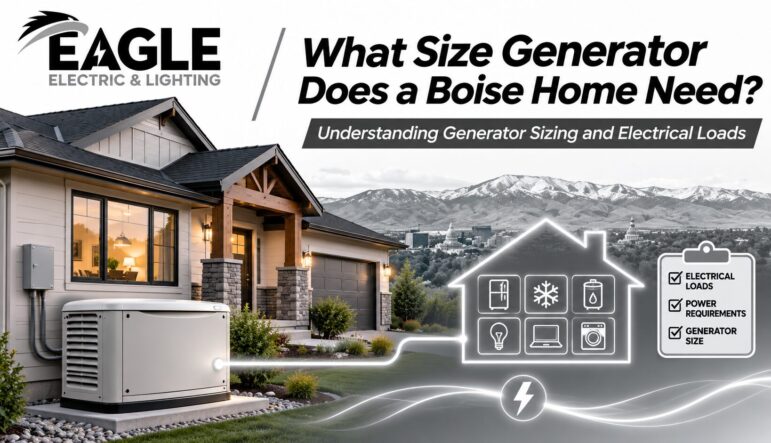
What size generator does a Boise home need to keep essential appliances running during a power outage? The answer depends on your home’s electrical loads, heating and cooling equipment, and how much backup power you want. Choosing the right Electrical Generators for your Boise property involves more than comparing generator wattage or home square footage. Whether you live in Boise, Eagle, Meridian, Star, Middleton, Caldwell, Emmett, or Nampa, understanding generator sizing can help you avoid overloaded equipment, unnecessary expenses, and unexpected power interruptions.
At Eagle Electric & Lighting, we help Treasure Valley homeowners evaluate their electrical systems and plan dependable backup power solutions. This guide explains generator capacity, running and starting watts, essential versus whole-house loads, and the installation considerations that matter for homes throughout southwestern Idaho.
Many Boise homeowners begin their search by asking whether a 10 kW, 18 kW, or 24 kW generator will power their house. Although these are common generator capacity categories, no single size works for every property. A smaller home with natural gas heating may have substantially different backup power requirements than a similarly sized home with electric heating, central air conditioning, and an EV charger.
As a preliminary planning reference, homeowners can consider the following generator capacity ranges. These are illustrative starting points rather than final equipment recommendations.
A generator rated at 20 kW can theoretically provide 20,000 watts of electrical power under its specified operating conditions. However, usable output depends on the equipment’s fuel source, rated voltage, operating conditions, and manufacturer specifications. A generator’s advertised capacity should never replace an assessment of the circuits and appliances it must actually supply.
A 2,000-square-foot home in West Boise might use a gas furnace, gas water heater, and gas range. Another house of the same size in Harris Ranch could rely on an electric heat pump, electric water heating, and additional high-demand appliances. Their electrical requirements may differ considerably even though their floor areas are identical.
The electrical service panel also provides only part of the picture. A 200-amp panel does not automatically mean the house needs a generator capable of delivering 200 amps continuously. Generator sizing is based on the connected and expected operating loads, applicable electrical calculations, and the loads that must function during an outage.
The most important part of residential generator sizing is understanding how electricity is consumed. Household appliances do not all operate continuously, and equipment containing electric motors can briefly demand considerably more power when starting. Ignoring those temporary requirements is one of the most common reasons an incorrectly sized generator struggles during an outage.
Running wattage describes the electrical power an appliance normally consumes while operating. For example, a refrigerator may draw a few hundred watts when its compressor is running, while an electric clothes dryer can require several thousand watts. Actual consumption varies by appliance model, operating cycle, and equipment condition.
For an initial generator sizing worksheet, homeowners can use these illustrative operating wattage ranges:
These numbers are estimates, not guaranteed specifications. An electrician should use equipment nameplates, manufacturer documentation, and appropriate electrical calculations when determining actual generator capacity. Some appliances also use variable-speed motors, electronic controls, or multiple operating stages that affect their power requirements.
Starting wattage is the temporary electrical demand required when equipment such as a refrigerator compressor, air conditioner, or well pump begins operating. Depending on the motor and starting technology, this demand may be significantly higher than the normal running load. The generator must have enough available starting capability to handle that demand without excessive voltage drops or overloads.
Consider a well pump that normally draws 1,100 watts but requires a temporary 3,600-watt input during startup. Its additional starting requirement is approximately 2,500 watts above its running consumption. That difference needs to be included when evaluating the generator’s surge capability and the other appliances operating at the same time.
Modern inverter-driven HVAC equipment and approved soft-start devices can sometimes reduce starting demands. However, their effect must be verified for the specific equipment rather than assumed during generator selection.
Homeowners can develop a preliminary estimate by identifying essential appliances, recording their running wattage, and accounting for motor starting requirements. This exercise helps clarify priorities before requesting a professional generator evaluation. Final sizing should also consider applicable electrical codes, manufacturer requirements, power quality, and the generator’s actual output rating.
Start by separating essential loads from equipment you can temporarily leave off. During a Boise winter outage, keeping the heating system functional may be more important than operating a clothes dryer or electric oven. During summer, refrigeration and cooling requirements may become more important, particularly for households with temperature-sensitive medical needs.
Typical priority loads include the following:
Consider a hypothetical Treasure Valley home with a gas furnace, refrigerator, freezer, selected lighting circuits, internet equipment, and a well pump. After evaluating the equipment, suppose its expected simultaneous running load is approximately 4,150 watts. If the largest additional motor-starting demand is 2,500 watts, the preliminary peak requirement would be approximately 6,650 watts.
The basic estimate is 4,150 running watts + 2,500 additional starting watts = 6,650 watts. Allowing an illustrative 20% planning margin increases that figure to approximately 8,000 watts. In this example, an 8–10 kW generator could be a candidate for further evaluation, provided its actual starting capacity, electrical configuration, and fuel-specific rating meet the system requirements.
This simplified calculation assumes the largest motor starts while the listed running loads are present and that other motors do not start simultaneously. A professional evaluation may require a different approach if multiple motors start together, electrical heating loads are substantial, or load management equipment is involved.
An essential-circuit system supplies only the equipment selected for outage operation. A whole-house system is designed to serve the home’s electrical distribution system, but it may still use automatic load management to prevent excessive simultaneous demand. The distinction is important because access to every circuit does not necessarily mean every major appliance can run at once.
For example, a household might want heating, refrigeration, lights, and internet service available continuously while temporarily restricting EV charging, electric water heating, or certain kitchen appliances. With properly designed load management, homeowners may achieve their backup priorities without purchasing an unnecessarily large generator.
Generator capacity should reflect how a home operates during the conditions most likely to make backup power useful. Across the Treasure Valley, winter freezing temperatures, summer heat, strong winds, and occasional storm-related electrical disruptions can influence homeowners’ preparedness decisions. These conditions affect both which appliances are essential and how long backup power may be needed.
Homes in Boise’s North End include older properties where electrical panels, branch circuits, and heating equipment may have been modified over the years. Before recommending a standby generator, an electrician should evaluate the existing electrical service, grounding and bonding arrangement, and available transfer equipment options. Older construction does not automatically require a larger generator, but it can affect installation planning.
On the Boise Bench and in West Boise, homes vary from established single-family residences to more recently updated properties. A house with gas heating may need relatively modest electricity to operate the furnace blower, while an all-electric heating system can present a much larger backup load. Homeowners should also identify refrigerators, freezers, and other equipment operating in garages or additional living spaces.
Newer properties around Harris Ranch and Southeast Boise may feature larger HVAC systems, additional electrical equipment, and modern home automation. Some homes near the Boise Foothills also have landscaping or irrigation systems that introduce additional electrical loads. These features should be reviewed individually rather than assumed to operate during every outage.
Properties near the Boise River Greenbelt may have different site conditions, outdoor equipment arrangements, or space constraints for generator placement. The selected installation location must provide the clearances and access required by the generator manufacturer and applicable local regulations. Being near a landmark does not determine generator size, but the home’s equipment and site layout certainly matter.
Homeowners in Eagle and Star may have properties with extensive landscaping, multiple HVAC systems, or additional structures requiring electricity. Around Eagle Island State Park and the surrounding residential areas, an evaluation might include irrigation pumps, detached garages, or specialized household equipment. These loads are particularly important when planning comprehensive backup power.
Meridian and Nampa contain a wide range of established and newer neighborhoods, making individual appliance inventories essential. In Middleton, Caldwell, and Emmett, some properties rely on private wells or other pump-driven systems that need careful starting-load calculations. These are examples of possible requirements, not assumptions about every household in those communities.
Portable generators and permanently installed standby generators can both provide useful electricity during an outage, but they serve different needs. A portable unit generally requires manual setup, outdoor operation, refueling, and appropriate connections to individual appliances or a professionally installed transfer arrangement. Standby systems are designed for permanent installation and can automatically restore selected household circuits when utility power fails.
A portable generator may be suitable for a homeowner whose main goal is powering a refrigerator, a few lights, and limited electrical equipment. It can offer a smaller initial equipment investment, although fuel storage, operating noise, safe placement, and manual operation remain important considerations. Not every portable generator can supply 240-volt household equipment, so voltage and outlet specifications must be checked.
A permanently installed standby generator may be preferable when automatic operation, heating system continuity, or multiple essential circuits are priorities. These systems commonly use natural gas or propane and connect through properly rated transfer equipment. Homeowners considering standby generator installation in Boise should evaluate fuel availability, expected backup loads, installation space, and long-term maintenance requirements.
Fuel selection can also influence available electrical output. Certain generator models have different rated capacities when operating on natural gas versus propane. Gas service capacity, propane storage, and expected runtime should therefore be considered alongside generator wattage.
Even a correctly sized generator can create serious hazards if it is installed or operated incorrectly. A residential standby system requires properly selected transfer equipment, appropriate overcurrent protection, suitable wiring, and a safe outdoor location. Connecting a generator directly to household wiring without approved transfer equipment can energize utility lines and endanger electrical workers and others.
A transfer switch separates the home from the utility supply before generator power is connected. An automatic transfer switch performs this function without requiring the homeowner to manually change the power source. Where appropriate, load management equipment can temporarily prevent high-demand appliances from operating together and exceeding generator capacity.
Permanent generator installations generally involve electrical permitting and inspection, and additional approvals may be required for fuel connections, equipment location, or site work. Requirements vary among Boise, Eagle, Meridian, Star, Middleton, Caldwell, Emmett, Nampa, and their surrounding counties. The appropriate permitting authority should be confirmed for the property’s actual jurisdiction before installation begins.
Fuel-powered generators produce carbon monoxide, an invisible and potentially fatal gas. Portable generators must never operate inside a home, garage, basement, shed, or other enclosed space, even when doors or windows are open. The U.S. Consumer Product Safety Commission recommends operating portable generators outdoors at least 20 feet from homes and buildings, with exhaust directed away from openings.
Homeowners should follow the U.S. Consumer Product Safety Commission’s generator safety guidance and maintain working carbon monoxide alarms. Permanently installed standby units have their own manufacturer-specified placement and clearance requirements, which must be followed along with applicable codes. Never assume the portable-generator distance recommendation replaces the installation instructions for a listed standby model.
Professional generator sizing goes beyond adding appliance wattages. An electrician considers the actual electrical system, motor-starting behavior, generator ratings, transfer equipment, and expected load combinations. They can also evaluate whether the home would benefit from an essential-load subpanel or automatic load management.
At Eagle Electric & Lighting, the generator planning process starts with understanding what the homeowner needs to keep running during an outage. From reviewing electrical loads to coordinating appropriate equipment and installation requirements, a structured evaluation helps prevent expensive sizing mistakes. It also gives homeowners a clearer understanding of the difference between essential backup and more comprehensive whole-home coverage.
A 2,000-square-foot Boise home may need approximately 10–18 kW for a substantial selection of essential loads, while some whole-house applications may lead homeowners to consider 20–26 kW equipment. These are broad planning ranges, not a substitute for calculating actual demand. Heating type, air conditioning, motor startup, and available load management ultimately determine the appropriate generator size.
A 10,000-watt generator may support essential circuits in many homes, particularly where heating and water heating primarily use natural gas. However, running central air conditioning, electric heating, an electric range, and other high-demand appliances simultaneously may exceed its capability. A professional should verify the generator’s continuous and surge ratings against the selected loads.
A natural gas furnace often requires electricity mainly for its blower, controls, and ignition components. Its electrical demand can be much lower than that of electric resistance heating, which may require several kilowatts or more. Homeowners should confirm the furnace’s electrical specifications and starting requirements before choosing a generator.
A 22 kW standby generator can be a practical option for many residential whole-house backup applications, but it cannot automatically support every possible combination of household appliances. Large electric heating loads, multiple air conditioners, EV charging, and other major equipment can exceed its capacity. Automatic load management may help prioritize important circuits while reducing simultaneous demand.
If your property relies on an electrically powered private well, a backup generator may help maintain water availability during an outage. The generator must match the pump’s operating voltage, running demand, and motor-starting requirements. Pump horsepower alone is not enough to determine generator compatibility, especially when other essential household equipment must operate at the same time.
Permanent standby generator connections generally require electrical permits and inspections, with possible additional requirements depending on the fuel system and installation site. The responsible permitting authority depends on the home’s location and jurisdiction. Working with qualified electrical professionals helps homeowners address the applicable approvals, equipment requirements, and safety inspections.
The total cost depends on generator capacity, fuel infrastructure, transfer switch selection, electrical panel modifications, installation location, permits, and site preparation. A smaller essential-circuit installation may cost less than a comprehensive standby system involving extensive electrical or gas work. An on-site evaluation provides a more reliable estimate than pricing a generator by kilowatt rating alone.
Choosing a home generator is ultimately about knowing which electrical loads matter most when utility power is unavailable. A properly planned system should provide sufficient capacity for essential appliances, accommodate relevant starting demands, and operate safely within the limits of its equipment. For homeowners throughout Boise, Eagle, Star, Meridian, Middleton, Caldwell, Emmett, and Nampa, the best generator is not necessarily the largest one; it is the system appropriately matched to the property’s electrical needs.
Eagle Electric & Lighting provides residential generator installation services throughout the Treasure Valley, including electrical load evaluations, standby system planning, transfer switch integration, and professional installation. Whether you want essential backup for a smaller home or a more comprehensive power solution for a larger property, thoughtful planning can help you make a confident investment.
Ready to determine what size generator your home needs? Contact Eagle Electric & Lighting at (208) 781-0220 to discuss your home’s backup power requirements and installation options. Explore our Electrical Generators services and take the next step toward dependable, professionally installed backup power for your Treasure Valley home.