Mon-Fri 07:00 AM - 05:00 PM
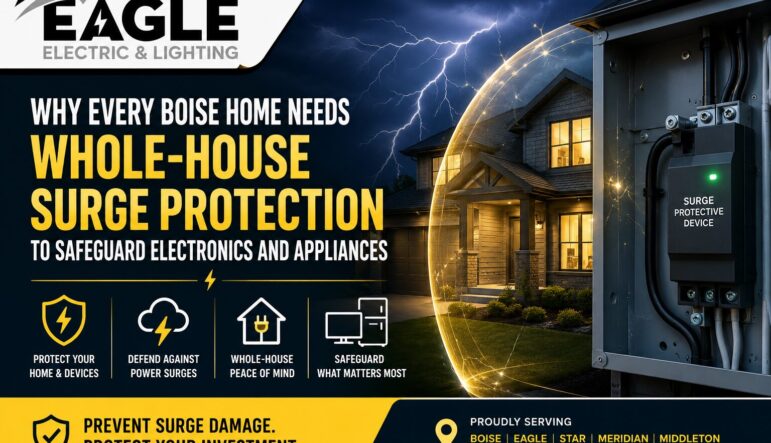
Boise homeowners rely on more electronics and electrically powered appliances than ever—from refrigerators and HVAC equipment to televisions, computers, smart-home devices, garage-door openers, and EV chargers. A sudden voltage spike can damage sensitive components in seconds, which is why Surge Protection deserves a place in any serious home electrical safety plan. For homeowners in Boise and nearby communities such as Eagle, Star, Meridian, Middleton, Caldwell, Emmett, and Nampa, whole-house surge protection can provide an important layer of defense against electrical surges caused by utility events, large appliances, and nearby lightning.
Boise’s climate makes electrical demand particularly noticeable during the hottest part of the year. The National Weather Service has reported periods of thunderstorms across southwest Idaho accompanied by lightning, gusty winds, heavy rain, and occasional hail. Those conditions matter to homeowners because lightning and utility disturbances can create transient voltage events that travel through electrical systems. National Weather Service Boise provides current weather information and storm safety guidance for the region.
At the same time, modern Boise homes contain increasingly expensive electronic equipment. A single home may have a central air conditioner or heat pump, refrigerator, freezer, washing machine, dryer, microwave, television, computers, networking equipment, security cameras, smart-home controls, and other devices connected to the electrical system. A whole-house surge protective device, commonly called an SPD, is designed to help limit damaging transient voltage before it reaches connected equipment.
That does not mean surge protection can make a home immune to every electrical event. No surge protective device is designed to guarantee protection from a direct lightning strike. Instead, whole-house protection is best viewed as one part of a broader electrical safety strategy that can reduce exposure to many common surge events.
Many homeowners associate surges only with lightning, but electrical surges can have several causes. Large appliances and HVAC equipment can create smaller internal voltage transients when motors switch on or off. Utility-related events, switching operations, faults, and lightning in the surrounding area can also introduce transient overvoltage into a home’s electrical system.
The Electrical Safety Foundation International notes that an estimated 60% to 80% of surges originate from internal sources within a home or business. That is important because a homeowner does not have to experience a dramatic thunderstorm for surge protection to be useful. Repeated smaller surges may contribute to premature electronic component failure even when there is no immediately obvious damage.
Boise-area summers can bring extended periods of high temperatures, increasing reliance on air conditioning and other cooling equipment. HVAC systems contain motors, compressors, control boards, and other electronic components. Frequent cycling of equipment can contribute to internal transient events, making HVAC equipment both a potential source of electrical transients and equipment worth protecting.
Lightning does not have to strike your house directly to create a problem. Nearby lightning activity can induce electrical disturbances or affect utility infrastructure. ESFI explains that panel-mounted surge protective devices provide a first line of defense by limiting harmful voltage and diverting surge current through the grounding system. Homeowners should still follow storm safety guidance and unplug sensitive electronics when appropriate.
One of the biggest advantages of whole-house surge protection is coverage. A plug-in surge protector protects equipment connected directly to it, while a properly installed service-level SPD is connected at the home’s electrical service or panel and is designed to protect circuits throughout the property.
This matters because some expensive equipment is not connected through a conventional power strip. Your HVAC system, refrigerator, dishwasher, garage-door opener, lighting controls, sump equipment, water heater controls, and other permanently connected loads can be exposed to transient voltage. Whole-house surge protection is designed to address the electrical system more broadly rather than protecting only one desk, entertainment center, or computer.
ESFI also identifies heating and air-conditioning systems, washers and dryers, water heaters, ranges and refrigerators, lighting, and entertainment systems among equipment that can be damaged or have its lifespan reduced by surges. The organization cites an estimate from the National Electrical Manufacturers Association that the average home has approximately $15,000 worth of equipment that can potentially be damaged by surges.
Whole-house surge protection is relevant whether you live in an established Boise neighborhood or a newer home elsewhere in the Treasure Valley. Homes in the North End, East End, Boise Bench, Harris Ranch, and Warm Springs Mesa can have very different electrical layouts and equipment combinations, but the fundamental need to manage electrical transients is the same.
For homeowners near the Boise River Greenbelt or areas surrounding Julia Davis Park, the goal is not to choose protection based on a particular landmark. Instead, an electrician should evaluate the home’s service equipment, grounding and bonding, panel configuration, connected loads, and existing protection. A home electrical system should be assessed as a complete system rather than simply adding a device without checking the conditions around it.
The same principle applies outside Boise. Homeowners searching for surge protection in Eagle, Star, Meridian, Middleton, Caldwell, Emmett, or Nampa should consider the age and configuration of the home’s electrical system, the value of connected electronics, and whether the property already has an appropriate surge protective device.
Plug-in surge protectors still have a useful role. They can provide additional protection for specific electronics such as a desktop computer, television, networking equipment, or home-office setup. However, they protect only the equipment connected to that device. They cannot provide the same whole-system coverage as a properly installed panel-level surge protective device.
A power strip also should not automatically be considered a surge protector. Some power strips provide only additional outlets and do not contain meaningful surge-protection components. Look for products specifically designed and rated for surge protection, and replace point-of-use protection when the manufacturer indicates that it has reached the end of its service life or after a significant surge event.
For valuable or especially sensitive electronics, homeowners can use a layered approach. A properly selected whole-house SPD can provide protection at the electrical service, while point-of-use protection can add another layer for computers, televisions, networking equipment, and other sensitive electronics.
However, protection should never be treated as a substitute for proper grounding, bonding, correct electrical installation, or safe storm practices. The best results come from an electrical system that is correctly installed and maintained as a whole.
Not every home has the same electrical requirements, so selecting a surge protective device should not be based solely on the cheapest product available. An electrician can evaluate the home’s electrical service, panel, grounding system, available space, connected loads, and equipment needs before recommending an appropriate solution.
Idaho’s electrical requirements also matter. Current Idaho rules incorporate requirements related to surge protection, including provisions addressing dwelling-unit surge protective devices. Because electrical codes and local requirements can change, homeowners should have a qualified electrician confirm the requirements that apply to the specific project rather than relying on an old installation guide or online recommendation.
There is not always an obvious warning before a surge damages equipment. In some cases, a device simply stops working. Other times, homeowners notice intermittent electronic problems, unexplained failures, damaged power supplies, or repeated issues following storms or electrical disturbances.
If multiple appliances or electronic devices have experienced failures after electrical events, it is worth having the electrical system evaluated. The same applies when you purchase a new home, remodel an older property, install expensive electronics, add an EV charger, upgrade HVAC equipment, or make other major electrical changes.
Homeowners should also avoid assuming that a previously installed plug-in device means the entire property is protected. Whole-house surge protection and point-of-use protection serve different purposes, and a qualified electrician can explain how the two approaches can work together.
At Surge Protection, Eagle Electric & Lighting focuses on practical electrical solutions designed around the home’s actual electrical system. For homeowners in Boise, Eagle, Star, Meridian, Middleton, Caldwell, Emmett, and Nampa, a professional evaluation can help determine whether whole-house surge protection is appropriate and how it should integrate with existing electrical equipment.
The right installation is about more than mounting a device inside a panel. The electrician should consider the service equipment, grounding and bonding, panel condition, connected loads, manufacturer instructions, and applicable electrical requirements. This approach helps homeowners make an informed decision instead of treating surge protection as a one-size-fits-all purchase.
Professional installation is particularly important because surge protective devices connect directly to the home’s electrical system. ESFI recommends that whole-home surge protection be installed by a qualified electrician. Homeowners should never attempt to work inside an energized electrical panel simply to install or replace surge-protection equipment.
For many homeowners, whole-house surge protection is a worthwhile layer of protection because modern homes contain numerous expensive electronic and electrical systems. It can help reduce the effects of many transient voltage events, including some caused by internal equipment switching, utility events, and nearby lightning.
It is not a guarantee against every electrical event, including a direct lightning strike. A qualified electrician can evaluate your home’s electrical system and equipment to determine whether an SPD makes sense for your property.
Whole-house surge protective devices are designed to protect the home’s electrical system more broadly than a plug-in surge protector. That can include permanently connected equipment such as HVAC systems and refrigerators, along with circuits serving outlets, lighting, and other loads.
Actual protection depends on correct equipment selection, installation, grounding, and the characteristics of the electrical event. Additional point-of-use protection may still be appropriate for sensitive electronics.
No surge protective device should be described as a guarantee against direct lightning damage. Lightning can involve extremely high energy, and electrical systems may be affected through multiple pathways.
Whole-house surge protection can nevertheless provide an important defense against many surge events associated with lightning and electrical disturbances. During severe storms, homeowners should also follow established lightning safety practices and disconnect sensitive equipment when it is safe and practical to do so.
No. A basic power strip may simply provide additional outlets and may not provide surge protection. A surge protector is specifically designed to limit or divert transient overvoltage.
Check the product labeling and manufacturer’s specifications rather than assuming that every power strip provides protection. For valuable electronics, layered protection can combine a whole-house SPD with appropriately rated point-of-use protection.
A whole-house surge protective device is commonly installed at or near the home’s main electrical service equipment, such as the main panel or service equipment, depending on the electrical system and the selected device. Installation must follow the manufacturer’s instructions and applicable electrical requirements.
Because the work involves electrical service equipment, homeowners should have a qualified electrician determine the correct installation method for the specific panel and service configuration.
There is no single replacement interval that applies to every surge protective device. Service life depends on the device design, the number and intensity of surge events it experiences, and the manufacturer’s specifications.
Many devices include a status indicator that helps show whether the protective components remain operational. If the indicator shows a failure condition, or if the device has experienced a significant event, have it inspected and replaced as appropriate.
Yes. Remodeling, electrical panel work, HVAC upgrades, home additions, and other electrical projects can be good opportunities to evaluate surge protection. If your home is receiving new high-value equipment or substantial electrical upgrades, it makes sense to consider how those changes affect the overall protection strategy.
Whether you live in Boise’s North End, Eagle’s established neighborhoods, a newer community in Meridian or Star, or a home farther west in Middleton, Caldwell, Nampa, or Emmett, a professional electrical evaluation can help identify the most appropriate solution.
Protecting your home’s electronics starts with understanding how electrical surges can occur and what your existing system can—and cannot—protect. Whole-house surge protection can add an important layer of defense for HVAC equipment, appliances, electronics, lighting, and other connected systems throughout your property. If you are considering surge protection for a Boise-area home, contact Eagle Electric & Lighting to discuss your electrical system and determine whether a professionally installed solution is right for your home.
For additional consumer guidance about residential surge protection and electrical safety, review the Electrical Safety Foundation International surge protection guidance.